
Historic Arizona Arrest Records
A well-known Arizona arrest can leave paper in several places. The arresting agency may keep a booking file. It may keep an investigation file too. A county superior or city court may hold the criminal case itself. Federal prosecutions sit in federal court. Appeals and correctional profiles add still more custodians. Each has its own rules. A widely shared photo is usually a news or agency copy. It is not the full case file. It may not even match what an agency releases today.
Seven sourced Arizona cases show those different record routes. They run from Maricopa County prosecutions to a federal case in Tucson and Scottsdale city-court matters. A disposition is simply the court's recorded outcome. Where a source points to a live docket, the event record is the honest limit. It supports only what that docket itself shows.
The Arizona Judicial Branch's public case search is the place to begin. Its case lookup covers participating courts, though access varies. Open the Arizona court case lookup and search by case number or court.
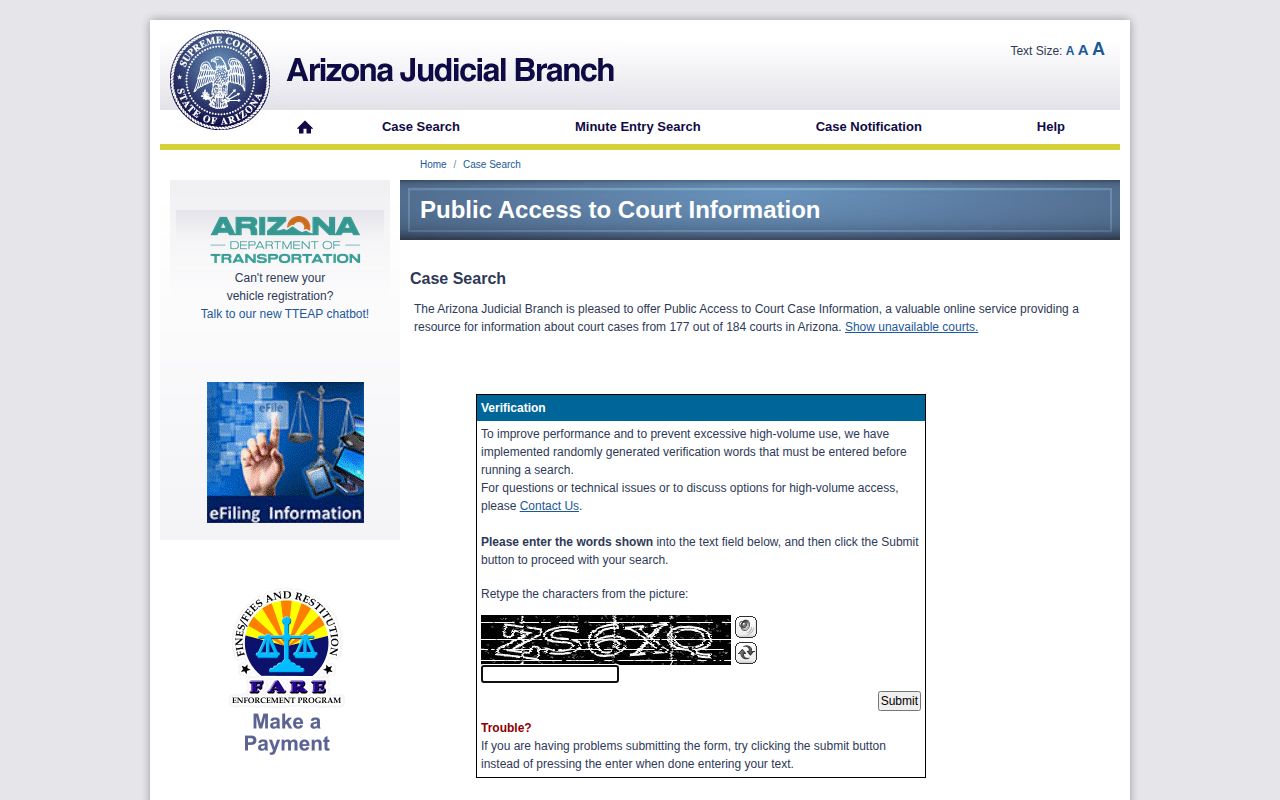
That image shows a search interface, not a case result or booking photo. It displays query fields, nothing more. The court file remains the place to confirm a case event or its recorded outcome.
Arizona Notable Arrest Case Records
The table gives a starting record path for each case. Each row summarizes a documented arrest or prosecution. It also notes the outcome its cited source reported. Read the linked source in full. Then request the original file from the named court or agency.
| Case | Year and context | Documented outcome | Original record path |
|---|---|---|---|
| Jodi Arias | 2008 Maricopa County prosecution | First-degree murder conviction in 2013; later life-sentence proceedings. | Maricopa County Superior Court and appellate case records. |
| Jared Lee Loughner | 2011 Tucson shooting arrest | Federal guilty plea to 19 charges; seven consecutive life terms plus 140 years, as reported by DOJ. | U.S. District Court for Arizona and federal agency records. |
| Mark Goudeau | 2006-2007 Phoenix-area arrests and prosecutions | 2011 convictions on 67 felony charges, including nine first-degree murders; death sentences and a cited appellate judgment. | Maricopa County Superior Court, Arizona Supreme Court, and ADCRR if available. |
| Bryan Patrick Miller | 2015 arrest and Maricopa County prosecution | The cited Supreme Court docket describes a death judgment and appeal posture; check the current docket. | Maricopa County Superior Court and Arizona Supreme Court. |
| Charles Barkley | 2008 Scottsdale DUI arrest | Two misdemeanor guilty pleas reported in 2009; verify exact terms with the city-court file. | Scottsdale Police Department and Scottsdale City Court. |
| Michael Floyd | 2016 Scottsdale extreme-DUI arrest | Guilty plea and sentence reported in February 2017; verify the court docket for a current case summary. | Scottsdale Police Department and Scottsdale City Court. |
| Michael Marin | 2012 Phoenix-area arson case | Arson conviction followed by his death in a Maricopa County courtroom after the verdict. | Maricopa County Superior Court and local investigative records. |
"Arrest" and "conviction" are different events. A table row cannot replace the docket, a full opinion, or a later entry. The source links and record custodians below carry the detail a summary cannot.
Maricopa Historic Mugshot Cases
Jodi Arias was arrested in the Maricopa County prosecution. That prosecution followed the 2008 killing of Travis Alexander. The Maricopa County Attorney's case history covers the indictment, the arrest, and the 2013 first-degree murder conviction. It also covers the later life-sentence proceedings. The Arizona Court of Appeals opinion takes up the Superior Court case. It addresses its appellate issues. Start with the Maricopa County Superior Court file. Then read the appellate opinion for what it decided. Historic booking photos circulated widely in news coverage, but circulation never made them a public gallery or a complete record. The underlying files are the Superior Court case and the Mesa Police or Maricopa County investigative and booking records. Access limits apply. Read the Maricopa County Attorney's Arias case history and the Arizona Court of Appeals opinion.
Mark Goudeau was arrested in the Phoenix area in 2006 and 2007. Maricopa County prosecuted him for the Baseline Killer and related cases. The County Attorney reports 67 felony convictions in 2011. Those include nine first-degree murders, with death sentences imposed. The Arizona Supreme Court opinion addresses the capital case and affirms the judgment. The court file and that opinion are the right records for the result. An ADCRR profile may show custody details. But it replaces neither court record.
Note: An appellate decision records the issues and posture before that court, so check later docket entries before stating a current case status.
Arizona Court Appeal Records
Bryan Patrick Miller was arrested in 2015. Maricopa County prosecuted him on first-degree murder, kidnapping, and attempted sexual assault charges. The cited Arizona Supreme Court docket document names Superior Court case CR2015-102066. It also describes a death judgment now in appellate proceedings. That is the documented posture. Check the current docket for any later entry, since appeals can change things. The record route runs through the Maricopa County Superior Court file. It also covers Phoenix Police or county booking records, subject to agency policy and court access.
Michael Marin's case teaches a different record lesson. The Associated Press report carried by the Los Angeles Times says he was convicted of arson on June 28, 2012, and died by suicide in a Maricopa County courtroom after the verdict. The report stops at those events. So should any account of the case. The source path runs through the court file. It also includes the local fire or law-enforcement investigative record. Any booking item is held by the arresting agency. A dramatic moment after a verdict still says little. It does not turn one arrest image into the whole story.
Arizona Federal Arrest Records
The January 2011 Tucson shooting led to the arrest of Jared Lee Loughner. His prosecution played out in federal court, not state court. The U.S. Department of Justice later announced the outcome. It was a guilty plea to 19 federal charges, seven consecutive life sentences, and a further 140 years. That announcement gives the clearest summary of how the federal case ended. The underlying proceedings sat in the U.S. District Court for the District of Arizona. Related records split among federal agencies and the Pima County Sheriff. Some material in those files is sealed or exempt from release.
News outlets and government sources have republished his booking image many times. It circulates widely. That fame can mislead, though. A federal custody locator does not offer booking photos as a public field. It works poorly as a photo archive. The federal docket and the DOJ announcement carry the case result. For a local booking record, one agency matters. That is the one that created or holds it. Read the Department of Justice plea and sentence announcement.
A famous picture is a bad place to stop searching. It flags the story. The court file, by contrast, states the charges and the judgment that followed. The plea happened in federal court. No county jail roster can tell the whole tale.
Note: Federal court filings and local booking records are separate records, even when one case involves agencies at both levels.
Scottsdale Mugshot Case Records
Charles Barkley landed in Scottsdale police hands around New Year's Eve 2008, accused of DUI. He pleaded guilty to two misdemeanor DUI counts in February 2009. Associated Press reporting carried by the Los Angeles Times and the Notre Dame Observer covered it. The reports mention jail time, a fine, treatment, and an ignition interlock. The Scottsdale Police Department holds the arrest and booking record. Scottsdale City Court keeps the docket with the exact terms. Check that file for precise details.
Michael Floyd's Scottsdale arrest came in December 2016, an extreme-DUI case. FOX Sports and the AP reported his guilty plea. It came in Scottsdale City Court on February 17, 2017. The sentence included 24 days in jail and 96 days of home confinement. It also carried monitoring, a fine, and counseling conditions. CBS covered the sentence as well. A city-court check still beats a news summary for current terms. A news photo is not a booking database. The full outcome belongs beside any account of the arrest.
Both cases ran the city route. They started with a police arrest record. They finished in a city court file. That path differs from the Superior Court and federal routes described earlier. The Scottsdale court record settles the plea and sentence. Scottsdale Police answers arrest record requests. Read the Associated Press report on Barkley's case. Also see the FOX Sports/AP report on Floyd's plea from Scottsdale City Court.
Note: News reports add context, while the city court docket is the source for the exact terms of each plea.
Arizona Court Access Limits
Even a famous case may lack full public records in a portal. Arizona Judicial Branch eAccess puts it plainly. Some documents stay unavailable. They may be sealed, closed by law or court rule, or withheld to shield sensitive information. Public Access does offer a case-search interface. Treat it as a finding aid, not the official copy of everything. A failed search proves nothing. When a case fails to appear, contact the court clerk named in the case. Do not assume no file exists. Read the Arizona Judicial Branch eAccess access notice before relying on a portal result.
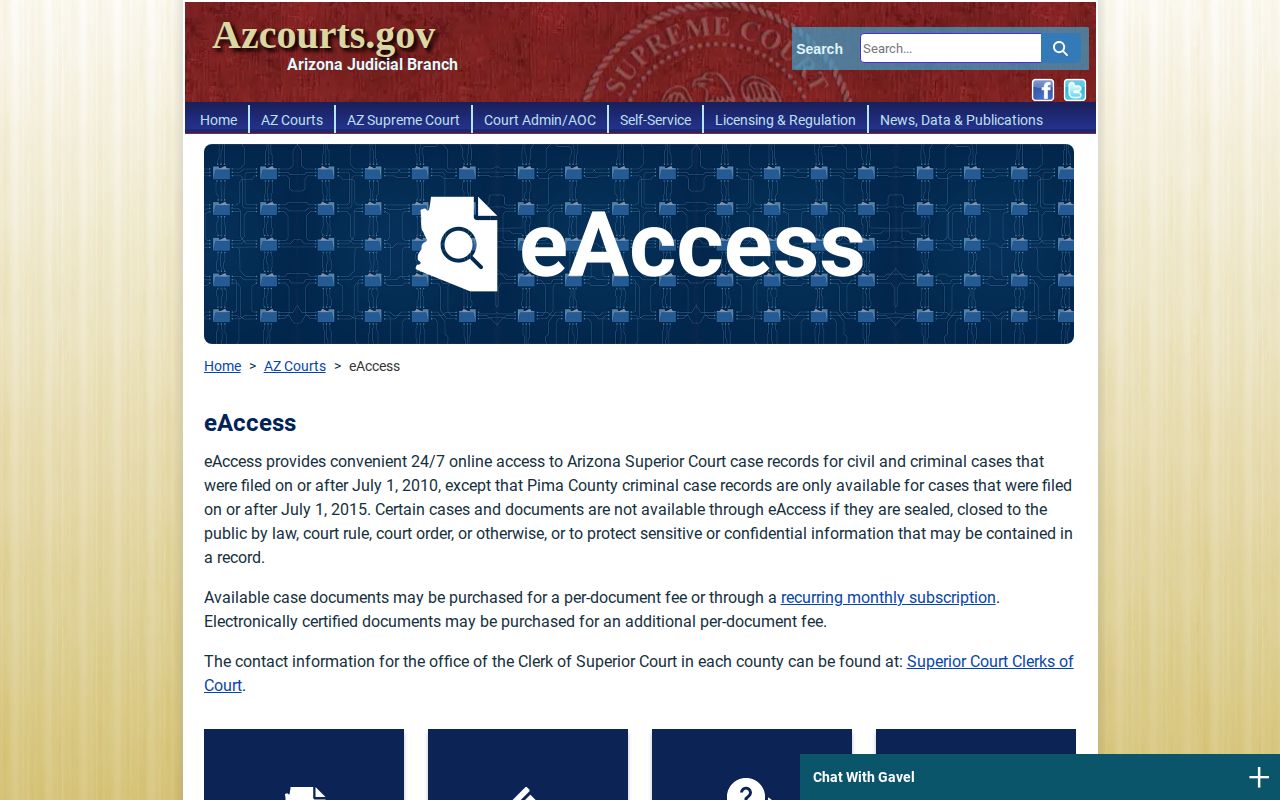
These limits concern court files, not a photo collection. A sealed or restricted document can stay invisible in the public interface. News accounts may still discuss the case at length.
Arizona law also lays out a process for sealing eligible case records. The current text of A.R.S. §13-911 controls eligibility and effects. No historic case summary can establish whether a particular record is sealed. The statute is a legal source, not a result from any case here.
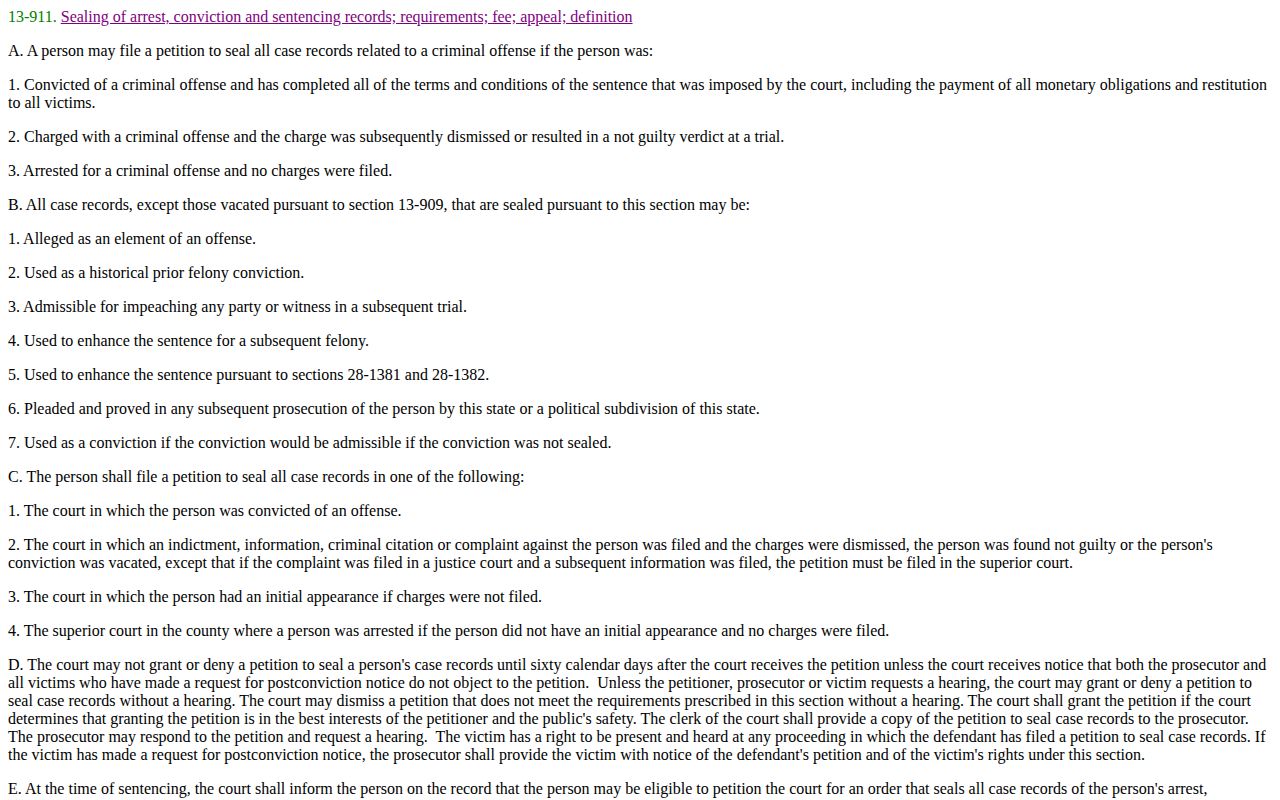
For a case-specific answer, use the live docket or the clerk. Sealing rules belong to state law, while each docket shows what happened in that one matter.
Look Up Any Arizona Arrest
A headline case and a routine arrest follow the same logic. Identify the agency. Find the booking source. Then verify the court result. Begin with a person's name plus a rough place and time, resist similar-name matches, and stick to official records where you can.
- Identify the likely arresting city or county. If it is unclear, use the appropriate county's official jail or police source and check its coverage notes.
- Check the official county jail or police roster for a current booking entry, when that agency publishes one.
- Ask the arresting agency for a booking or incident record if no public roster has the needed item.
- Search the correct court clerk's case system for charges, hearing events, pleas, judgments, and later appeals.
- For an older case, begin with the agency or court that created the record. The Arizona archives route explains when state archives or historic collections may be relevant.
When a case crossed systems, query each source on its own terms. County arrest and booking data sit in one system. State correctional profiles, federal custody entries, and court outcomes are not one shared file with them. A state profile can show correctional status. A county record documents the booking. A court docket holds the result once the case ends. The statewide record path is laid out there. County variations appear on the Arizona arrest and mugshot search page.
Older records start with the creating agency and its retention schedule. The State Archives keeps permanent state records. Modern county booking images do not automatically transfer there. Let a finding aid or an agency response point you to a relevant historic collection. Check these before wading into an archive catalog.
Note: A public case-search result is a pointer to the court record, and the court clerk can explain how to request a complete file.
Arizona Arrests and Case Outcomes
A booking photo shows one thing only. It marks an arrest event, nothing more. The Arizona cases cited here include convictions and guilty pleas, yet each summary stops at the procedural date the source describes. A plea, a verdict, a dismissal, and an appeal are all distinct legal steps that unfold after the camera clicks.
The same caution applies to any lesser-known case. Pull the court file. Look for the current disposition and any pending appeal. When the record is sealed or absent from the court's online portal, ask the clerk how to request it correctly. A recycled photograph or a stale news caption is not an update to the official case.
Read the pieces together. Arrest context, court outcome, and current posture build the fullest picture of an Arizona record. The original agency or court can confirm what it actually holds. A reproduced image alone answers none of those questions.